

How To Remove Lead Anchors From Concrete
While some tried-and-true methods are still needed for removing concrete anchors, a new product vastly reduces the try in many types – and breaks them off clean
Contractors of all kinds rely on concrete anchors to provide secure and permanent placement for large motors, pipes, structural framing, and a whole lot more. But when those anchors need to be removed, as they often do, the procedure can often exist hard and labor-intensive. And even then, they often don't come off completely.
In this article, we explain how to remove physical anchors, discussing anchors' characteristics, the tools bachelor for removal, and how removal approaches vary for different types of anchors.
Designed to permanently embed hole-and-corner, concrete anchors fall into ane of two wide categories
Physical and masonry fasteners consist of a mixture of bolts, sleeves, screws, and other components designed to set permanently in physical, brick, and other hard materials. Sometimes, this secure fit is provided by components that expand as the bolt is drilled or threaded into the physical. Other anchors are held in place past powerful adhesives. While the amount of force these fasteners can withstand varies with their type, construction, and the characteristics of the concrete, all concrete anchors are designed to stay in place even when placed under a great deal of stress, making them hard to remove.
Masonry workers categorize these fasteners as either male person anchors or female anchors:
- Female concrete anchors consist of an expanding sleeve or tube with female threads. Installers place this female-threaded component into a pre-drilled hole. Then, they force the expanding tube to widen within the pigsty. Some lock in identify only with the utilise of a specialized setting tool, while others simply aggrandize when joined with a male-threaded bolt, screw, or rod.
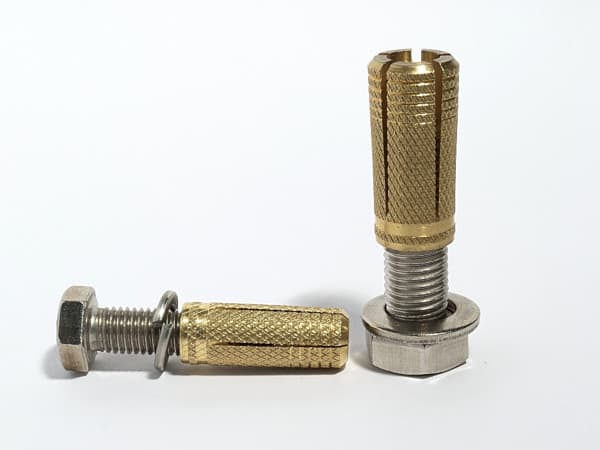
• Male concrete anchors combine the anchoring component and the fastening rod, commodities, or pin into a single unit. Hammering the pin in or tightening a nut over the threaded rod causes the anchor to expand and lock in place.
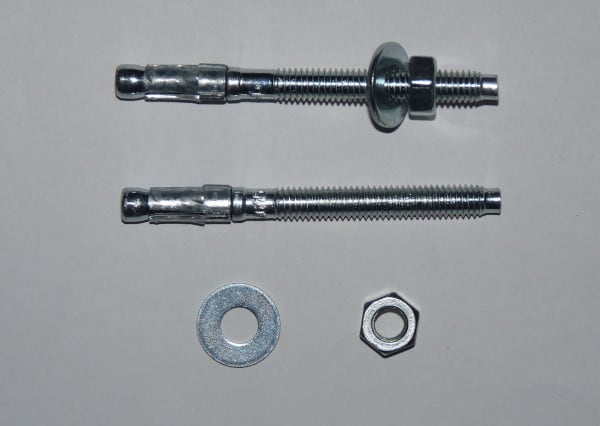
Nearly female person physical anchors can exist removed with unproblematic tools, but male anchors can prove troublesome
From renovation to electrical work, a broad diversity of projects sometimes entail the removal of anchor bolts. Warehouses, for instance, ofttimes need to relocate pallet racks – secured by either wedge or strike anchors – to make the most of inventory infinite.

Just very few physical anchors tin be completely removed without dissentious the concrete. Instead, anchor bolt removal usually entails leaving some part of the anchor embedded in the surface, while the above-surface part of the ballast – exist that a bolt, threaded rod, pinhead, or part of the anchor itself – is cut off or pulled out. By applying a concrete-patching solution, the remaining role of the anchor and the hole can be covered, leaving a flush surface.
Female concrete anchors are by and large simpler to remove. Usually, a screwdriver, pipe wrench, or vise grips tin can unthread the protruding bolt, leaving the female anchor flush with the concrete. If needed, a hammer tin can be used to knock the anchoring tube below the floor, and in some cases these tubes can simply be pulled out of the hole entirely.
Male physical anchors can be much more hard to remove. If the hole beneath the ballast is deep enough, some anchors tin simply be pounded into the basis. Others must exist separate with a hacksaw or cut-off cycle, leaving an higher up-ground nub. Mostly, that nub can be flattened with a hammer, although some larger nubs may demand to be leveled with a grinding wheel. Of course, this all requires a lot of attempt.
These methods can work well for removing anchor bolts a few at a time, simply contractors looking to remove tens or hundreds of bolts quickly observe these methods fashion too slow and frustrating. And in some facilities, a hot work allow may exist required due to the sparks generated past bending grinders or hacksaws, making a time-consuming task even more of a hassle.
Oregon-based Production Design Specialties has developed an effective, easy-to-employ ballast commodities removal tool
In response to the shortcomings of traditional anchor bolt removal methods, Production Design Specialties, an Oregon-based manufacturer of ergonomic tools and hazard mitigation equipment, began developing a unproblematic anchor bolt removal tool. Patrick O'Banion, Production Design Specialties' founder, describes their origin:
"I get-go fabricated this matter probably vii years ago. And the commencement one I fabricated, I didn't have the right equipment – it was expensive. So, I made it, and information technology worked well, but then I only hung information technology on my wall for probably well-nigh three or four years. Well, 1 of my other customers came over and asked if I had anything that could intermission off anchor bolts. He says 'Man, we've got 500 of them that we demand to pause off. It's gonna' take u.s. a week.' And then, I loaned it to him. Well, the next day by apex, they called me up and said 'Hey, Pat. We'll take 2 of them. And this other company's needs two of them. How fast tin can you go them made?'"
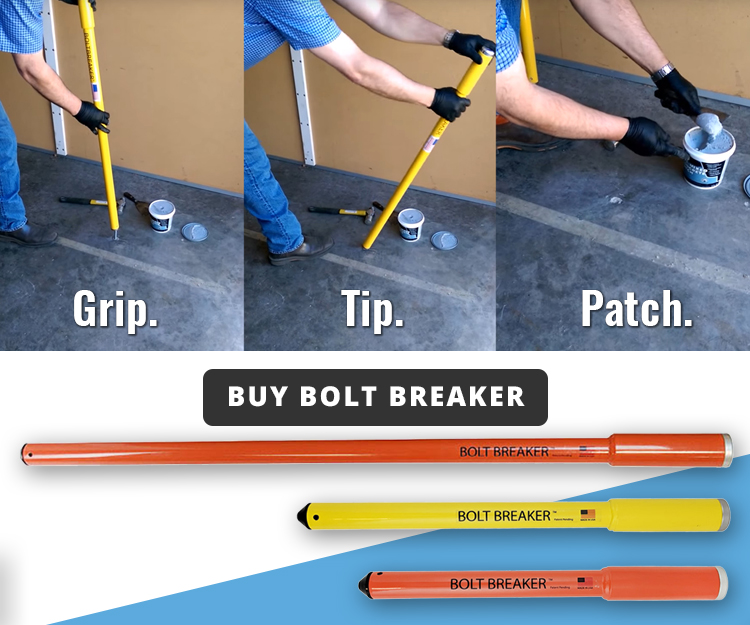
Presently after, Product Pattern Specialties secured the equipment needed to produce this new product – the Boltbreaker – at a much lower cost, chop-chop earning the business of a wide variety of contractors.
Boltbreaker provides 1 the simplest, safest, and quickest methods on the market for breaking off threaded rod. If something sticks out of concrete – whether it's part of a concrete ballast or not – it tin exist cut and prepped for concrete patch in a fraction of the time used past other methods.
By sliding the Boltbreaker over a protruding bolt, rocking information technology back and along one time, and rotating in a circular motion, this device heats and weakens the molecules inside the bolt, causing it to snap off – cleanly. In fact, harder bolts, such every bit SAE Class viii carbon-alloy steel bolts, break off even more cleanly than lower-grade bolts.
Using carbon-steel tips designed to match the diameter of each ballast bolt – including i/four″, 3/eight″ one/2″, 5/8″, and 3/iv″ sizes – information technology removes concrete anchors at or below floor level, leaving the floor ready for physical patching. Boltbreaker tin can remove everything from short nubs protruding above a nut to full-sized rods in excess of xx″ long. It requires no electricity, generates no dust, and produces no sparks, eliminating the demand for hot work permits, as shown in the video below:
How to remove male physical anchors by anchor type
If you want to remove most concrete anchors quickly and easily, buy a Boltbreaker. If yous but have a few to remove and you want to exercise it the old-fashioned manner – or it's a type of bolt that requires a unlike procedure – let's look at the methods of getting rid of these common male person concrete anchors:
- Wedge Anchors
- Strike Anchors
- Sleeve Anchors
- Split Drive Anchors
- Hammer Drive Anchors
Removing wedge anchors
The wedge anchor has a pocket-size expanding sleeve attached to one end of the anchor. Designed for apply in solid concrete, they are widely used to secure light posts, ductwork, and pallet racks.
Wedge anchors can exist removed from concrete in one of 3 means:
- If the hole beneath the ballast is deep enough, only pound it into the concrete with a hammer
- Use a saw or grinding wheel to cutting the anchor off just above the surface, and pound the rest flat with a hammer
- Or yous can simply place the Boltbreaker over the protruding rod, rock back and along, and rotate until the rod breaks off
Removing sleeve anchors and strike anchors
Strike anchors feature an expanding body with a threaded top and a pin used to expand the anchor in the concrete hole. Sleeve anchors, used with concrete, brick, or block, employ a threaded rod, a nut, and an expanding sleeve to secure to concrete.
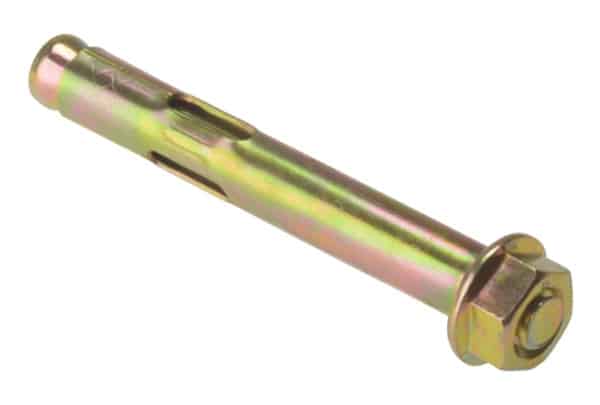
Like other male anchors, sleeve anchors and strike anchors can't exist fully removed, although some sleeve anchors tin can merely be tapped beneath the surface of the concrete after removing the nut and washer. But the threaded rod protruding from a sleeve or strike anchor tin can be removed and patched past following these steps:
- Remove the nut and washer from the anchor.
- If the hole beneath the anchor is deep enough, simply pound it into the concrete with a hammer.
- Cutting off the threaded, above-basis section of the anchor. If you have a Boltbreaker, slide it over the protrusion, stone dorsum and forth once, and rotate until the bolt snaps off below the surface. Alternatively, cutting through the bolt with a hacksaw or grinding wheel.
- If necessary, make the remaining nub flush with the surrounding concrete. Sleeve anchors can frequently be knocked deeper into the ground with a hammer. Hammer or grind any protruding rod equally necessary.
Removing split drive anchors and hammer bulldoze anchors
Hammer drive anchors feature a pin and sleeve designed for insertion in a pre-drilled hole. Hammering in the pivot causes the sleeve to expand, trapping the anchor in the hole. The split drive ballast is a single-piece anchor with two pre-expanded halves that compress and then re-expand when hammered into a hole.
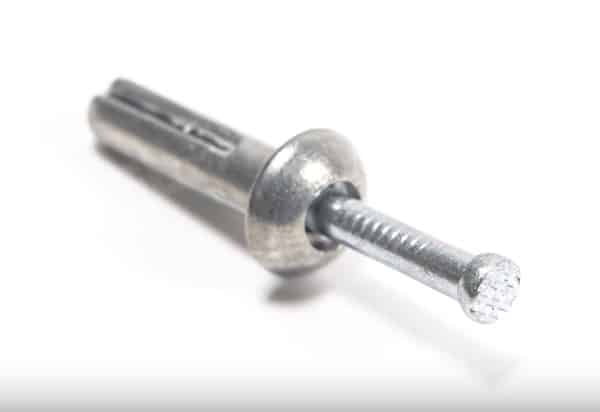
When installed, these anchors leave only a flat caput at the surface. Extraction methods for these hard-to-remove fasteners vary, merely recommendations for removing hammer drive anchors and split-drive anchors include:
- Pulling out the anchor with a flat prybar and hammer
- Removing the head with a grinder, then flattening the protruding anchor
- Chiseling nether the head and pulling out the ballast
How to remove female physical anchors by ballast blazon
While all female physical anchors can easily exist made flush with the surrounding concrete, well-nigh accept an anchoring component that remains permanently embedded.
Auto spiral anchors and drop-in anchors feature an expanding plug that locks in place using a specialized setting tool. Considering the entire anchor sits below the surface, whatsoever bolts or threaded rods connected to them can simply be unthreaded and the anchor hole patched over. Neither a automobile screw anchor nor a drop-in ballast can exist removed without damaging the concrete.
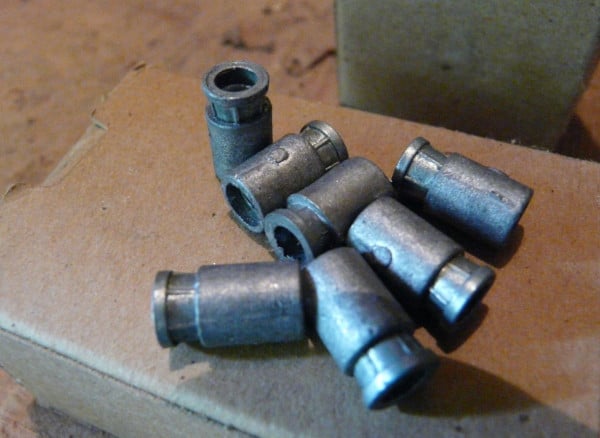
Lag shield concrete anchors apply a bolt and sleeve that insert in a hole. Equally the bolt threads into the lag shield, information technology expands, fastening it to the concrete. Lag shield physical anchors may exist the easiest anchor to remove: every bit the bolt is removed, the ballast may contract, allowing it to be pulled from the pigsty.
Specialty anchor bolt removal tools now bachelor at QRFS
If you're looking for a faster mode to remove wedge anchors, sleeve anchors, or strike anchors from concrete, Product Design Specialties' line of anchor bolt removal tools are now in stock at QRFS.
Available with an orange or yellow stop, each Boltbreaker includes ii interchangeable carbon steel tips designed to cleanly suspension off three/8″ or 1/2″ anchor bolts, metal rods, or rebar embedded in concrete. Tips for 1/4″, 5/8″, and 3/iv″ bolts are available by special order.
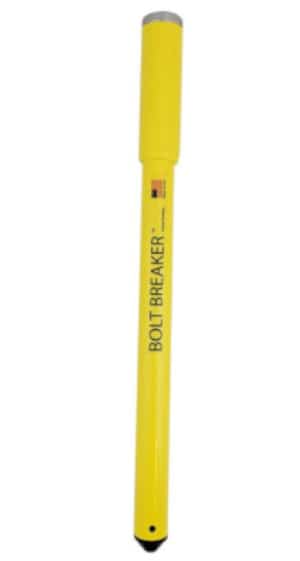
Boltbreaker tin suspension off depression-carbon, medium carbon, and medium carbon blend steel bolts or rod, and it is available in three sizes:
- Long (40″) for maximum leverage
- Standard (25″) for a alloy of leverage and portability
- Mini (xx″) for bars or otherwise compact spaces
Click here to view our selection of Boltbreakers.
Questions about how to remove concrete ballast bolts? Desire to order a Boltbreaker with non-standard carbon-steel tips? Phone call united states of america at +1 (888) 361-6662 or electronic mail [email protected].
This blog was originally posted at weblog.qrfs.com. If this article helped you find a solution, check usa out at Facebook.com/QuickResponseFireSupply or on Twitter @QuickResponseFS.
Source: https://blog.qrfs.com/153-how-to-remove-concrete-anchors-the-complete-guide/#:~:text=Usually%2C%20a%20screwdriver%2C%20pipe%20wrench,out%20of%20the%20hole%20entirely.
0 Response to "How To Remove Lead Anchors From Concrete"
Post a Comment